How stablecoins work and where the risk sits
On this page
Stablecoins are tokens designed to stay at a fixed value, usually $1. They are the backbone of crypto trading and payments. But "stable" describes a goal, not a guarantee — and each type keeps its peg in a different way.
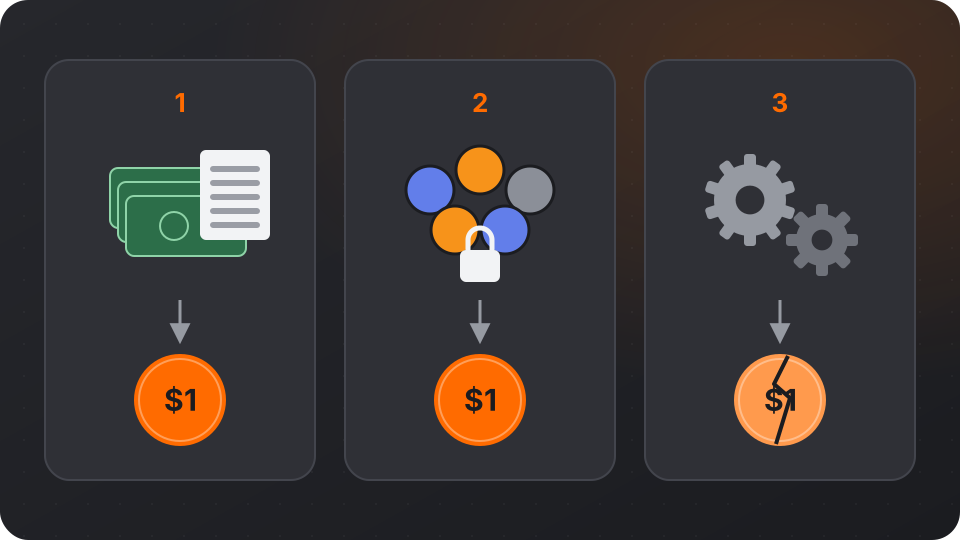
Type 1: backed by cash and bonds
Tokens such as USDT and USDC are issued by a company that says it holds reserves — cash, bank deposits and short-term government bonds — worth at least as much as the tokens in circulation. You trust the issuer to hold those reserves and to honour redemptions.
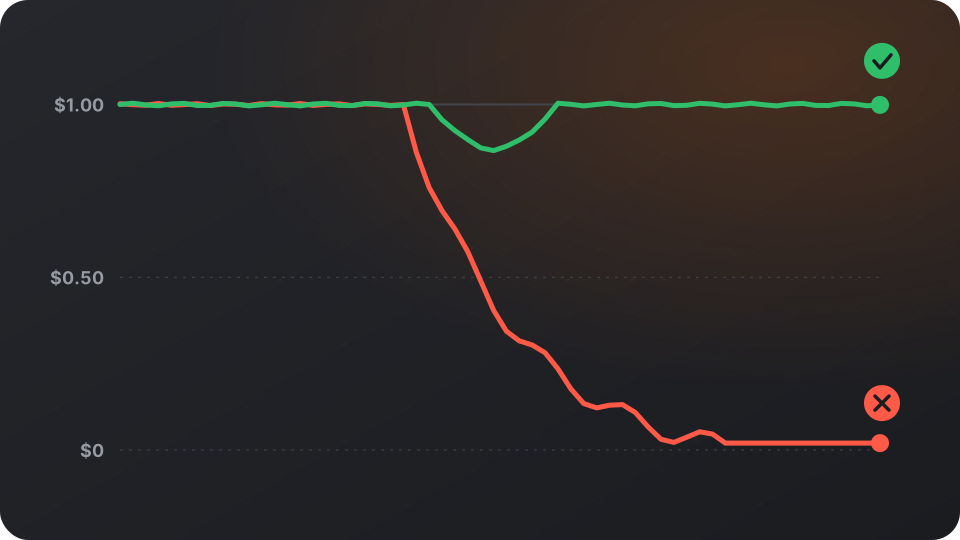
Where the risk sits: the quality and transparency of the reserves, the banks holding them, and the issuer itself. In March 2023, when Silicon Valley Bank failed while holding part of USDC's reserves, USDC briefly traded well below $1 until the reserves were confirmed safe. Issuers can also freeze tokens at specific addresses.
Type 2: backed by other crypto
Some stablecoins, such as DAI, are created by locking up more crypto than the value of the stablecoins issued. If the collateral loses value, smart contracts sell it automatically to keep the system covered.
Where the risk sits: a very fast crash in the collateral, bugs in the smart contracts, and decisions by the governance that runs the system. Many such systems now also hold traditional assets, which brings back some of the risks of type 1.
Type 3: algorithmic
Algorithmic stablecoins try to hold the peg with code and incentives rather than full reserves. The best-known example, TerraUSD (UST), lost its peg in May 2022 and collapsed, wiping out tens of billions of dollars of value along with its sister token LUNA.
Where the risk sits: confidence. When enough holders rush to exit at once, a mechanism without full reserves can spiral down very quickly.
Practical habits
- Check what backs a stablecoin and how often its reserves are reported, before you hold a large amount.
- Do not keep everything in a single stablecoin or a single platform.
- Be very wary of unusually high yields on stablecoins — the yield has to come from somewhere, and that is usually where the risk is.
- Remember that a stablecoin on an exchange also carries the exchange's risk.
For education only, not financial advice. Crypto assets are volatile and you can lose money.
Get one like this every morning
A 5-minute briefing in your inbox each weekday. Free, unsubscribe anytime.
Or follow the Telegram channel @pskdowkMarket now
Latest news